The Future of Footwear: How 3D Printing Is Revolutionizing Shoes
In recent years, 3D printing has moved far beyond prototyping and into full-scale production across multiple industries. One of the most exciting and fast-evolving applications is in footwear. From custom-fit sneakers to sustainable manufacturing, 3D printing is reshaping how shoes are designed, produced, and sold.
1. Customization at Scale
Traditional shoe manufacturing relies on standardized sizing, which often fails to meet individual comfort needs. 3D printing changes this completely. By using foot scanning technology, brands and manufacturers can create shoes tailored to the exact shape of a customer’s feet. This level of personalization improves comfort, reduces injury risk, and enhances overall user experience.
2. Faster Prototyping and Innovation
Designers can now iterate rapidly without the need for expensive molds or tooling. A new shoe concept can be designed, printed, tested, and refined within days instead of weeks or months. This accelerates innovation and allows brands to respond quickly to market trends.
3. Complex Structures and Performance Enhancement
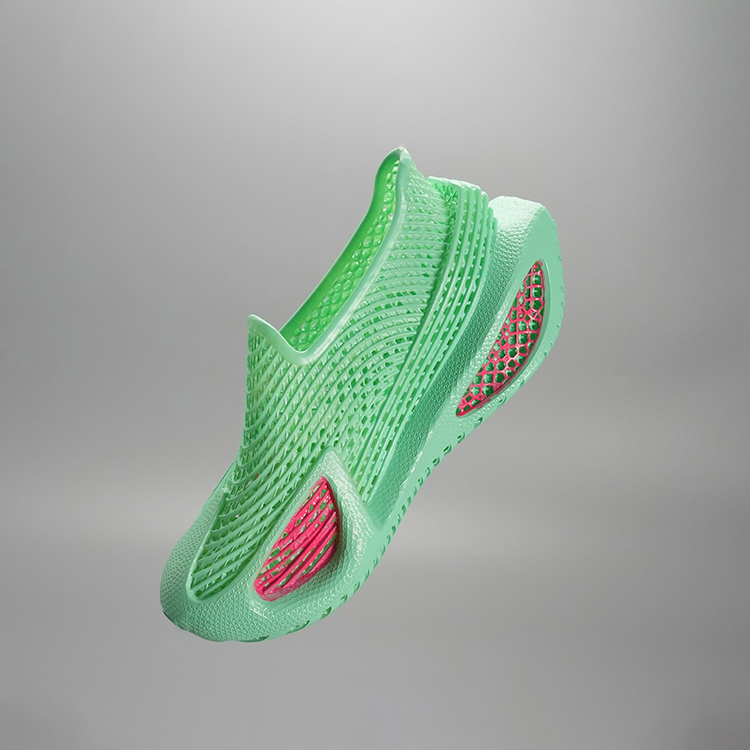
3D printing enables the creation of intricate lattice structures that are impossible with traditional manufacturing methods. These structures can optimize cushioning, flexibility, and durability. For example, midsoles can be engineered to provide different levels of support in specific areas of the foot, improving athletic performance and comfort.
4. Sustainable Production
Sustainability is becoming a major concern in the footwear industry. 3D printing reduces material waste by using only the exact amount of material required. Additionally, many 3D-printed shoes are made from recyclable or bio-based materials. On-demand production also minimizes overstock and reduces the environmental impact of unsold inventory.
5. Supply Chain Transformation
With 3D printing, production can be decentralized. Shoes can be manufactured closer to the end customer, reducing shipping costs and delivery times. This also lowers the carbon footprint associated with global logistics. In the future, we may see localized “micro-factories” producing shoes on demand.
6. Direct-to-Consumer Business Models
3D printing enables brands to offer direct online customization and ordering. Customers can design or modify their shoes through digital platforms, place an order, and receive a product that is uniquely theirs. This creates a more engaging buying experience and strengthens brand loyalty.
7. Challenges and Opportunities
Despite its advantages, 3D printing in footwear still faces challenges such as material limitations, production speed, and cost. However, as technology advances, these barriers are rapidly decreasing. Companies investing early in this space are positioning themselves at the forefront of a major industry shift.
Conclusion
3D printing is not just a trend in the footwear industry—it represents a fundamental transformation. By enabling customization, improving performance, and supporting sustainable practices, it is redefining what shoes can be. As the technology continues to evolve, 3D-printed footwear is set to become a mainstream solution for both consumers and manufacturers worldwide.