Vacuum Casting
Introduction of Vacuum Casting (Vacuum Casting Profile)
A vacuum casting apparatus which performs casting by decompression of a cavity, The vacuum casting technology which uses prototype (SLA laser rapid prototyping piece, CNC products) to make silicone mold under vacuum, and is poured under vacuum conditions, such as ABS,PU etc. Vacuum casting is also used to clone the prototype or copy the piece.
It has different types comprising: Vacuum Mould Casting, Vacuum Pressure Casting, Vacuum Sand Casting and so on. This method is especially suitable for small batch production. It is a low-cost solution to solve experimental production and small batch production in a short time, and can also meet the functional test proofing of some structurally complicated engineering samples
The process begins by placing a two-piece silicone mold into a vacuum chamber. The raw material is mixed with degassing and poured into molds. The gas is then evacuated to vacuum and the mold removed from the chamber. Finally, the casting is cured in an oven and the mold is removed to release the finished casting. Silicone molds can be reused.
Silicone molding results in high-quality parts comparable to injection-molded components. This makes vacuum casted models especially suitable for fit and function testing, marketing purposes or a series of final parts in limited quantities.
Advantages
● The cost is low, and the product production cycle is relatively short. There is less scrap and the machining cost is much lower than CNC machining and 3D printing.
● It is suitable for the processing and production of small batches of products. After making an original version, it can be copied according to the original version. However, CNC machining requires lathes to make prototypes one by one.
● Good molding operability. The soft molds after curing and molding are all transparent or translucent, with good tensile strength, which is convenient for cutting and parting.
● The probability of processing failure is small. As long as there is no problem with the original, the replica will naturally not go wrong.
● Good repeatability. The silicone used for molding has good fluidity before curing, and with vacuum defoaming, the detailed structure and decoration of the model can be accurately maintained.
Disadvantages
● It is easy to shrink and deform, because it will shrink after being heated at high temperature and then cooled, resulting in deformation. The general error is about 0.2mm.
● Generally, the vacuum compound moulding prototype can only withstand high temperature of about 60 degrees, and its strength and hardness are also lower than that of the CNC prototype.
Application Areas
● Automobile, motorcycle and its parts industry
● Aerospace industry
● Art and Craft
Vacuum Casting Materials
ABS: White, light yellow, black, red.
PA: White, light yellow, black, blue, green.
PC: Transparent, black.
PP: White, black.
POM: White, black,green, grey, yellow, red, blue, orange.
Post Process
For most plastic materials, here are post processing techniques that are available
|
Painting |
Matte |
|
Customized |
|
Glossy |
|
Customized |
|
|
Plating |
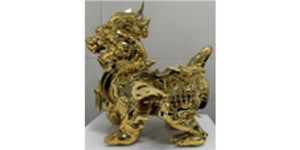
Electroplating |
 |
Customized |
|
Sputtering |
|
Customized |
|
|
Sanding |
Ordinary |
|
|
|
Fine |
|
Grey |
|
|
Silk Printing |
 |
Customized |